Centraal Beheer's situation mirror.

  • Client

    Centraal Beheer

  • Year

    2024

  • Services

    Service Design

    Concepting

    App Design

Background

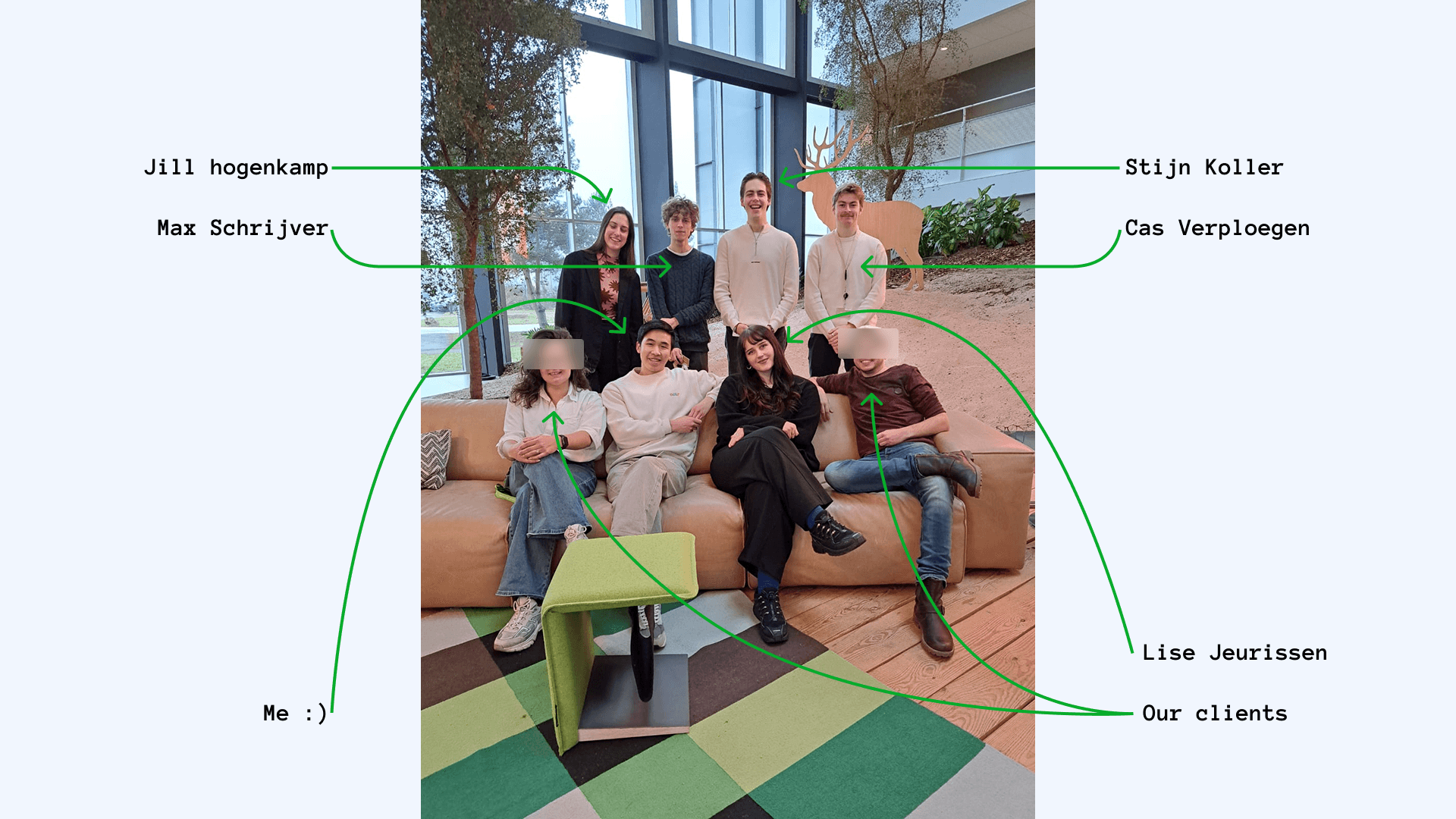
Centraal Beheer (the insurance company, and part of the Achmea conglomerate) came with the question of "how can we better support our users in periodically checking their products?". The team of: Stijn Koller, Cas Verploegen, Jill Hogenkamp, Lise Jeurissen, Max Schrijver, and myself had banded together to create the Situation Mirror/Situatie Spiegel. A way for users to get a clear overview, as well as better understand their financial and home situation. My role was doing end-to-end research, where I took the initative to faciliate key moments such as service blueprinting. As well as being the lead UX Designer in making sure the prototyping of the Situation Mirror worked properly, and was responsive.
Challenge

To answer Centraal Beheer's question, other questions first had to be answered. Such as: "When would 'periodically' be?", or "What holds people back?". To gain insights to these questions, both user and organizational research had to have been done.

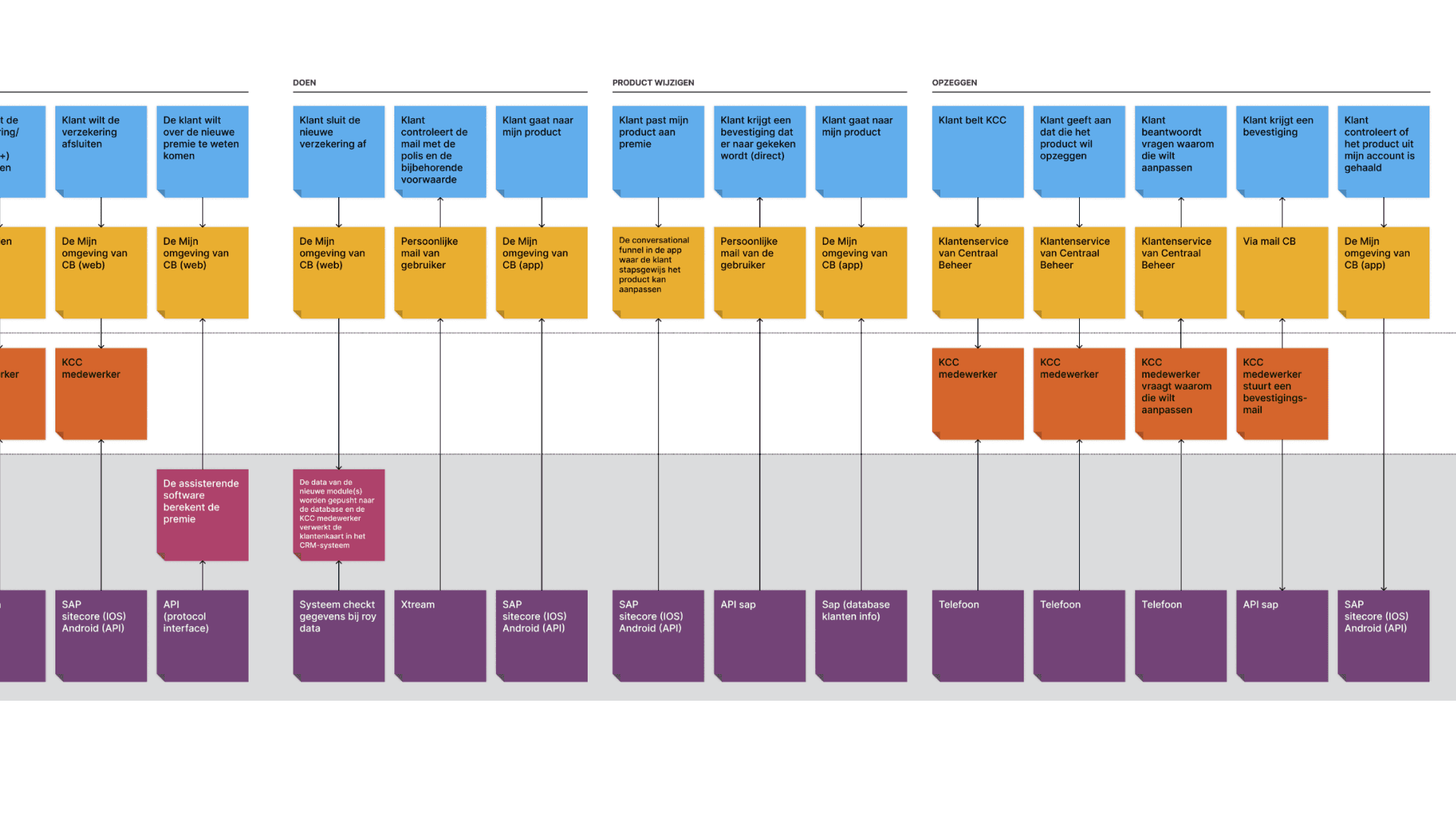
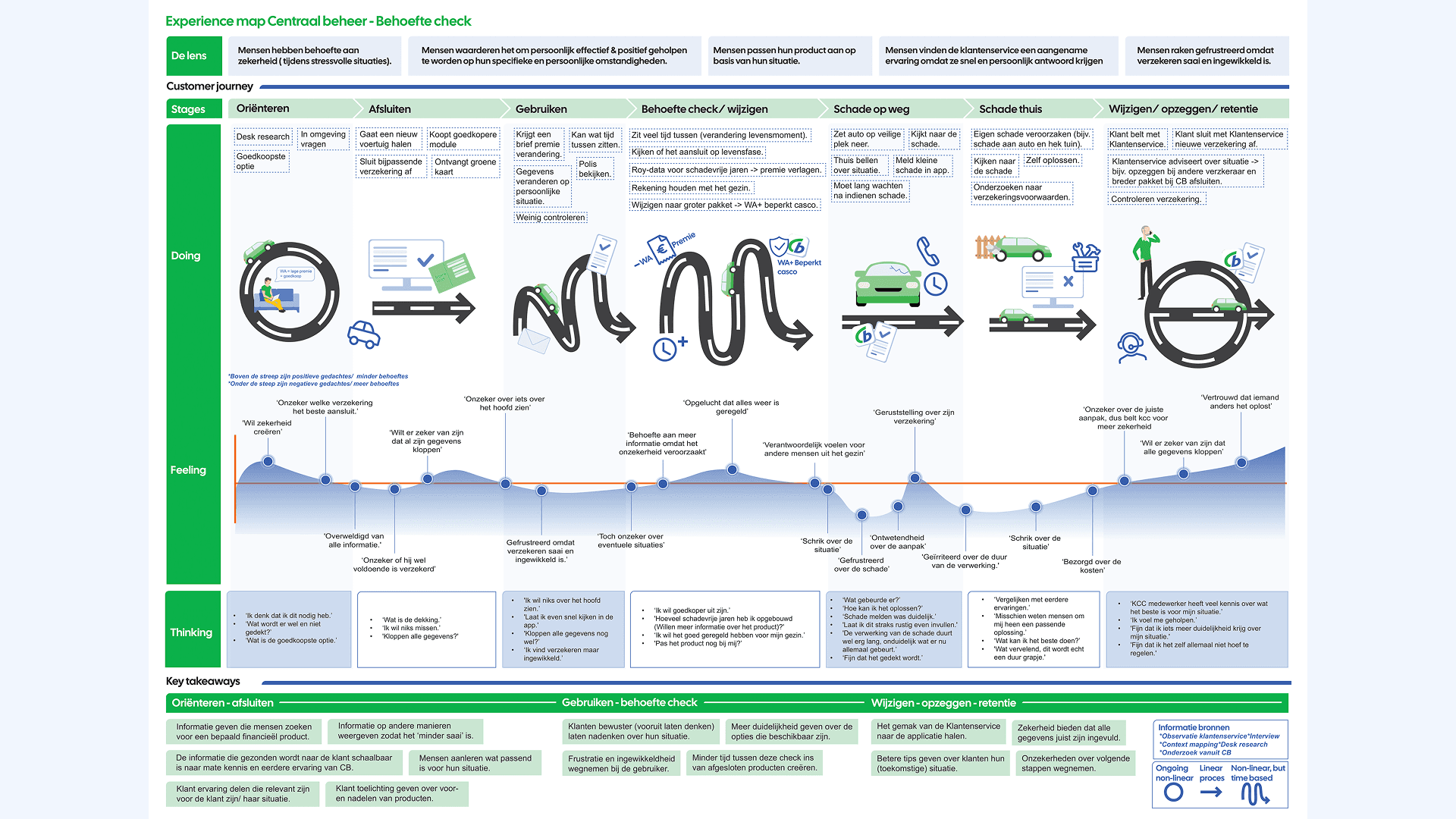
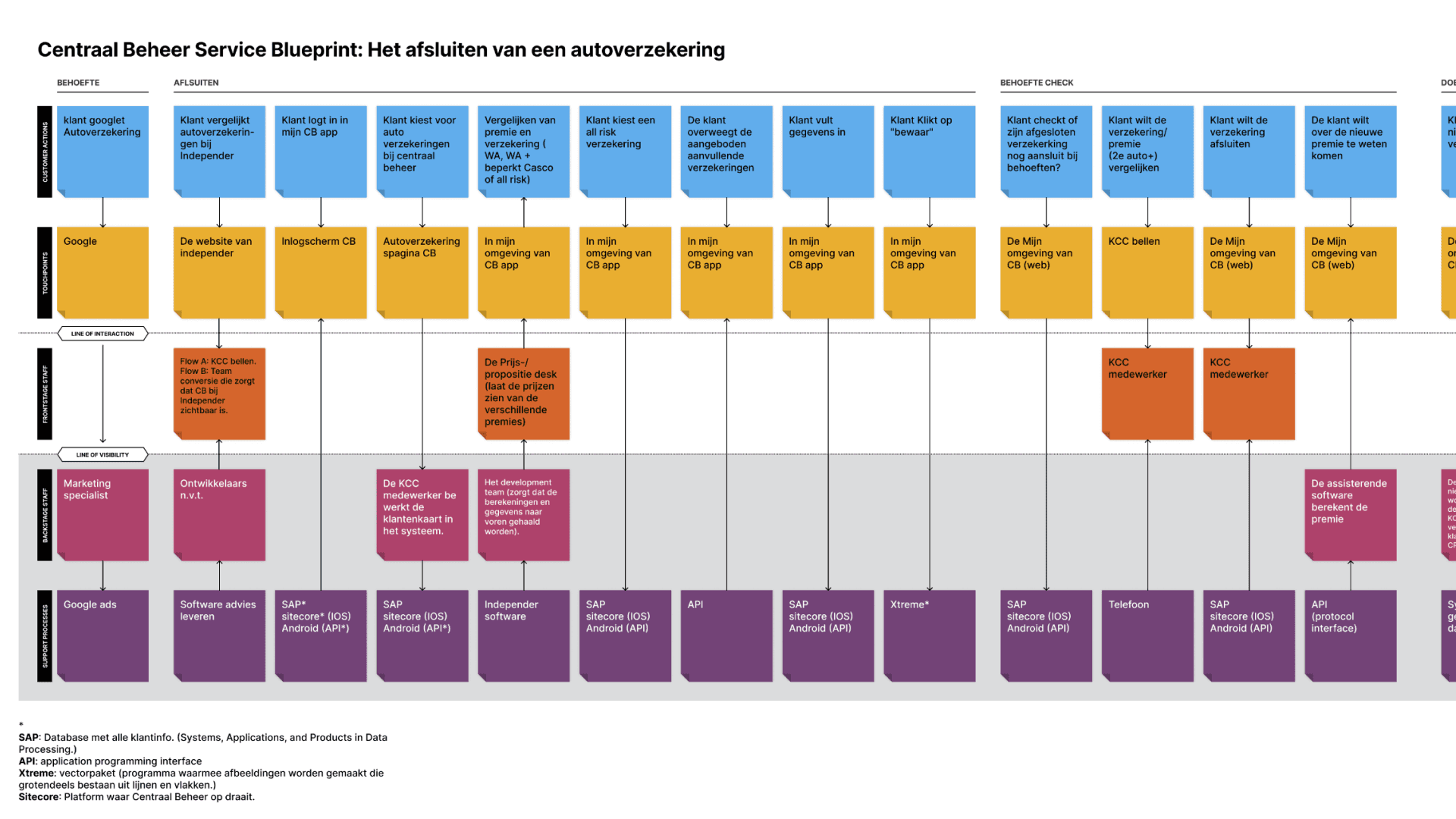
Implementing oberservations to learn what users need help with when it's too late. Interviewing to better understand how users look at situations, and down periods of checking. Experience mapping to figure out where the opportunities and gaps lie. Service blueprinting to align with the stakeholders and experience map to figure out how alignment can be made, and usability testing to see how users behave and think towards the concept.

Key findings

Key findings

Key findings

  • Taking action when it's too late

    Users do not check their products often, they usually check when a key life-moment such as buying a house happens, or when it's the end of the year and changes to e.g. payments have been made. This results in downtime of checking ones products, and needing to make adjustments/call for help when it's too late.

  • Not enough triggers

    Despite the scarce checking, there also weren't any ways that users get nudged or triggered to do check their products. This means that between having finished a (initial) purchase, and when accidents have occured, there is a gap of inactive downtime.

  • Insecure about changes

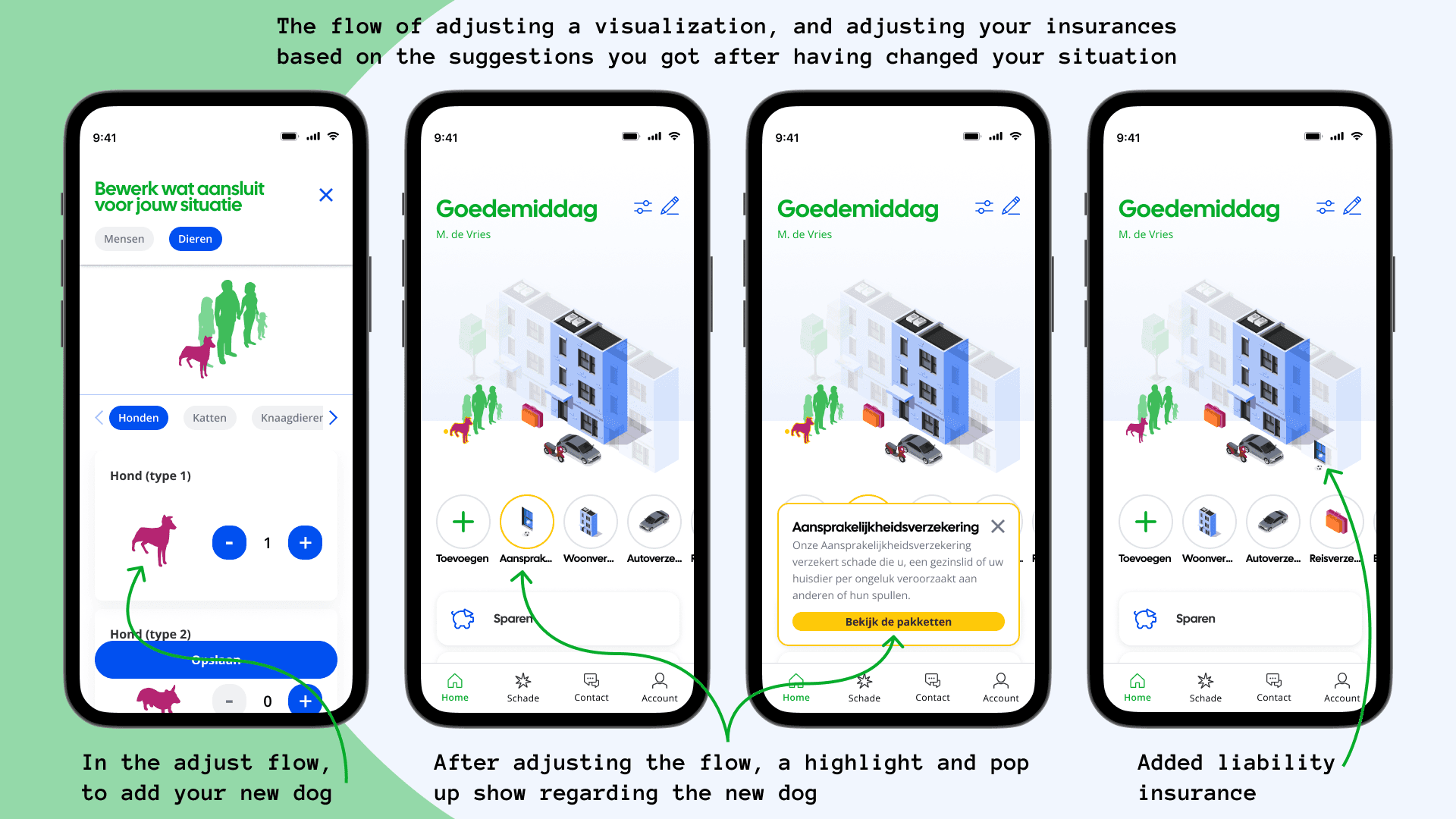
    Users often felt insecure about insurances, they weren't aware of what changes in their life (may) need an adjustment, or new insurance to match it. A user may have gotten a new dog, but the questions and answers towards a liability insurance is confusing. The result is that they become insecure about making any changes or adjustments in their products.

  • Lack of knowledge

    Insurances are complex. Most users can't confidently say what is insured for them. As well as informing about it, is not something top of mind, and seen as quite uninteresting.

Key results

Key results

Key results

The Situation Mirror

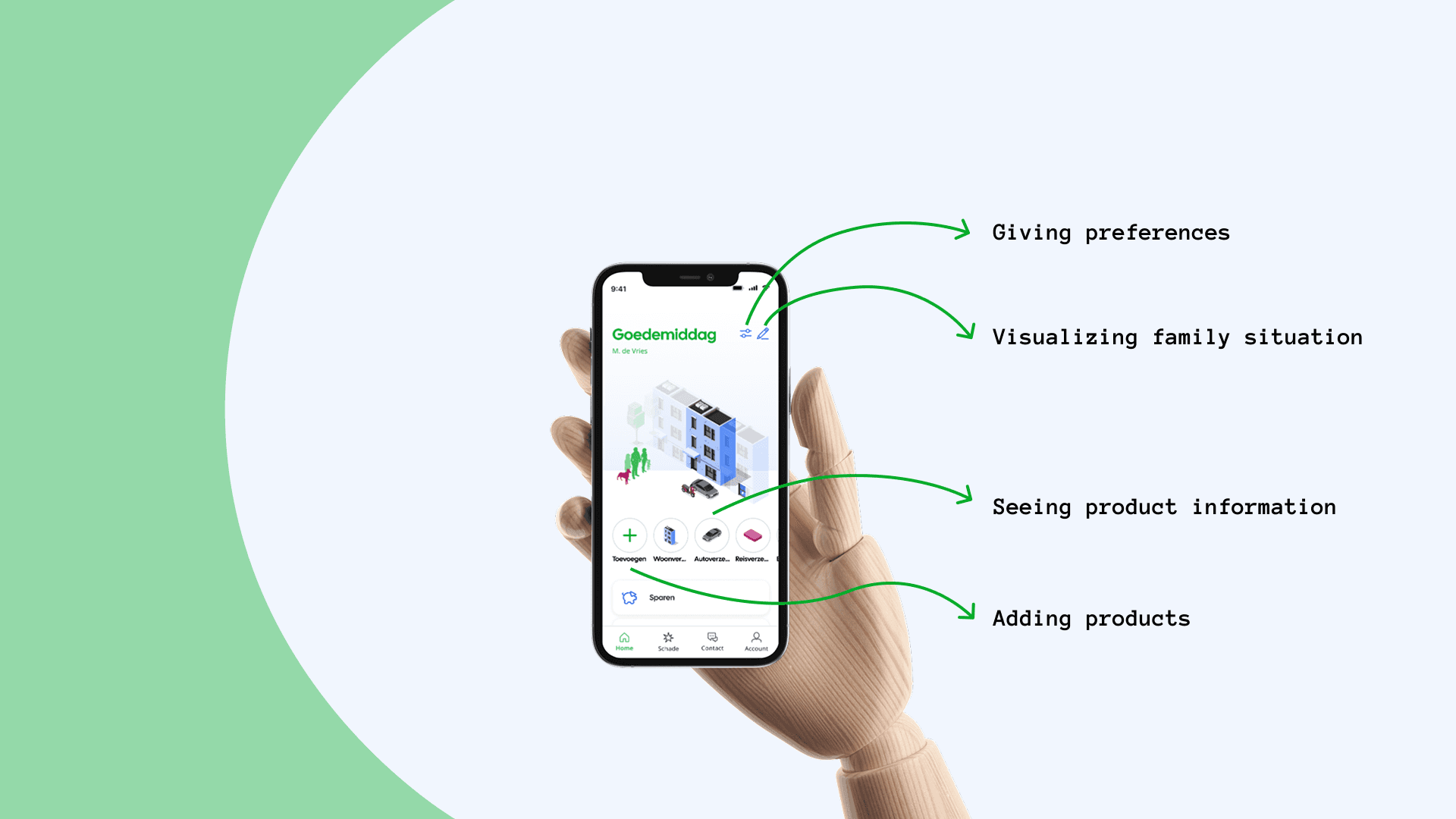
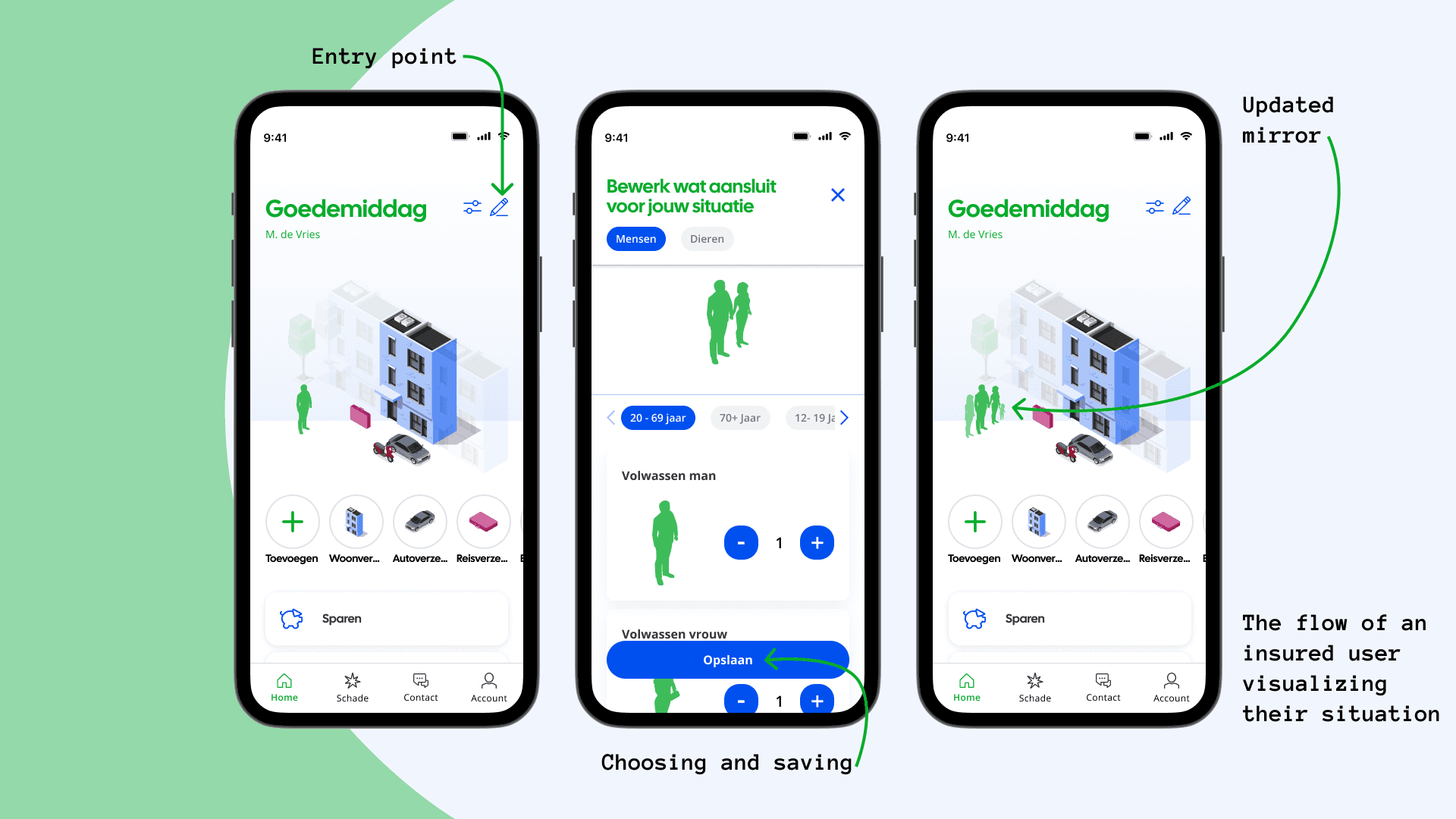
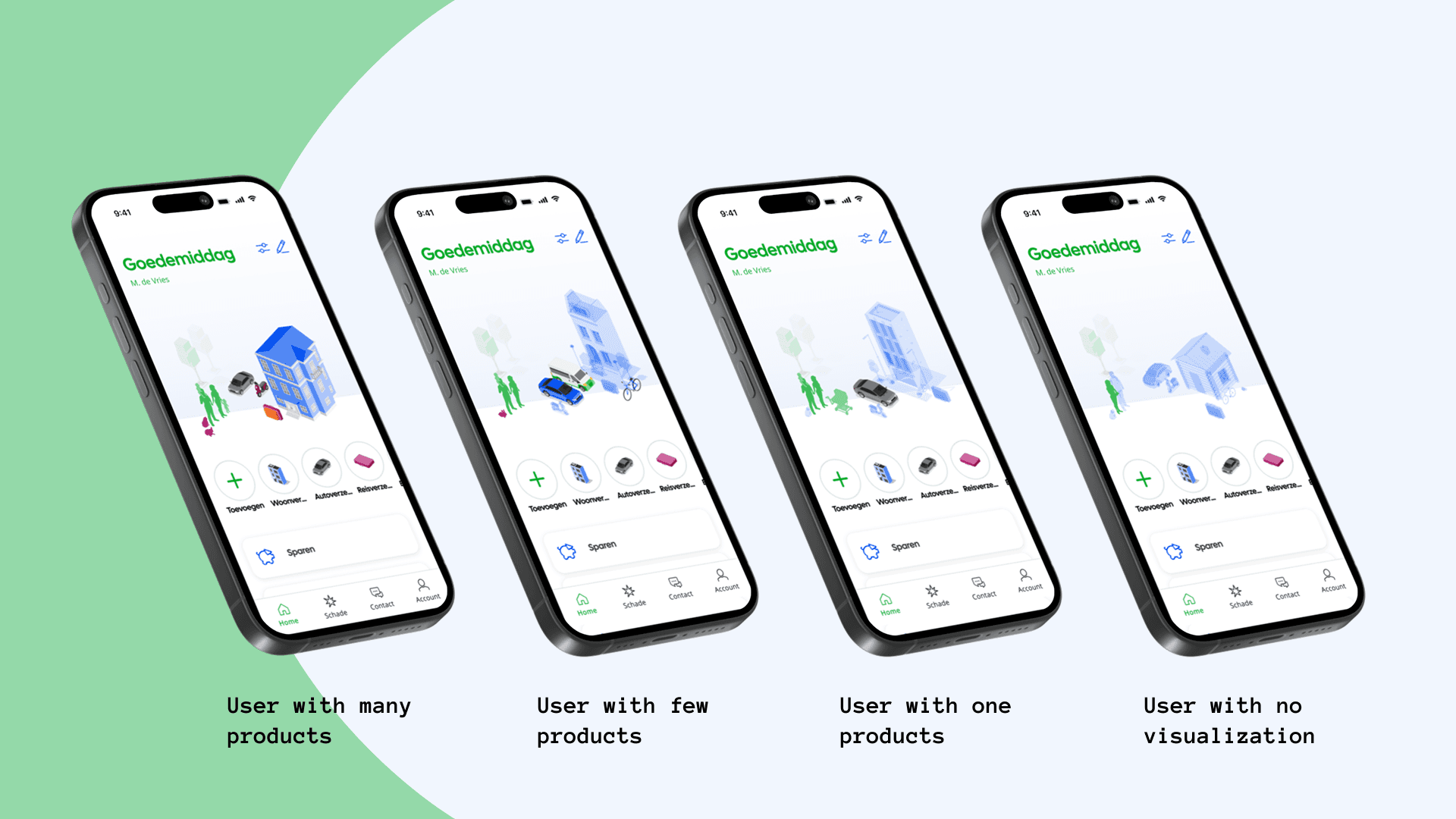
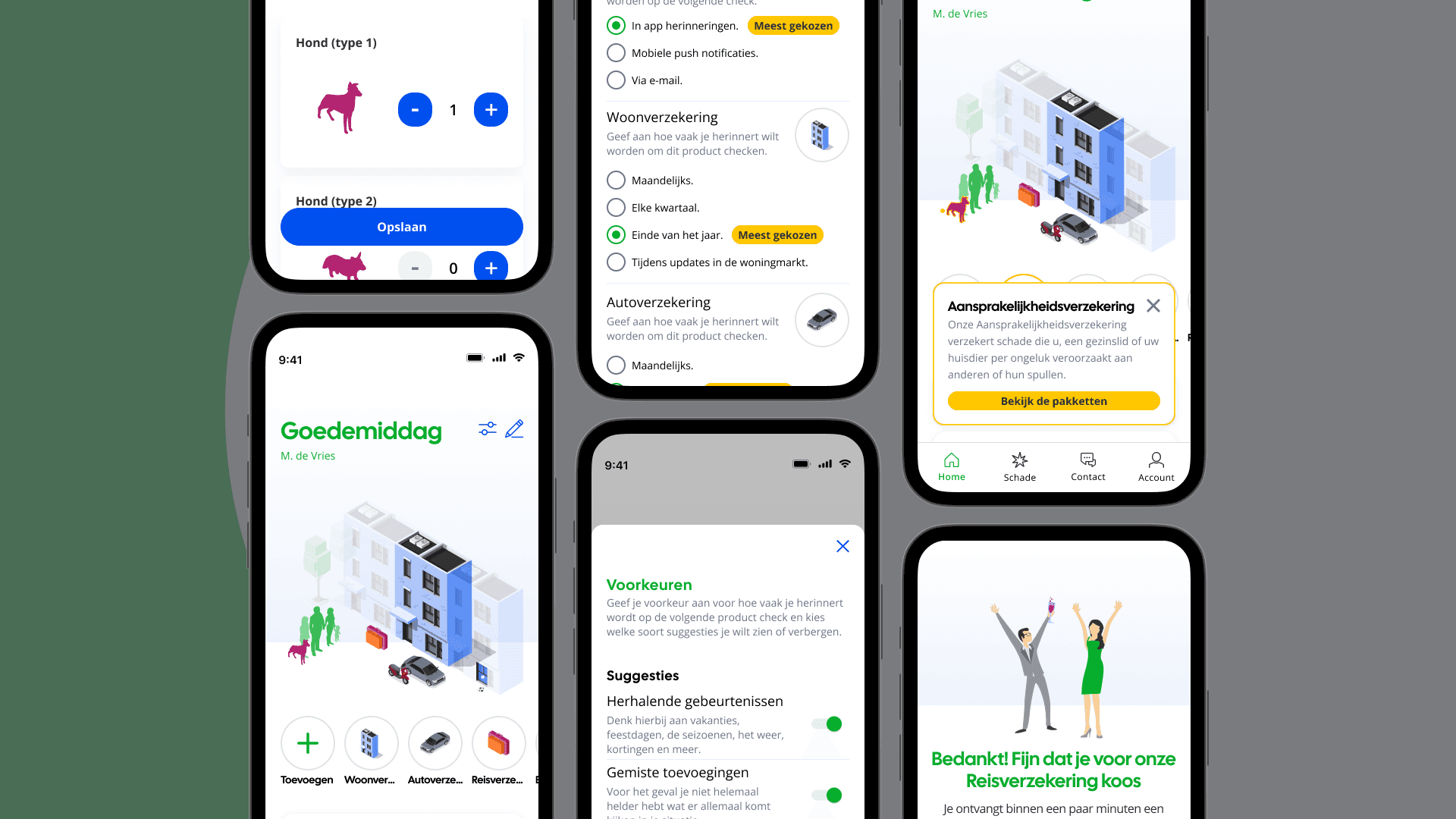
To prepare users for "too late" situations, combat scarce checking, informing about insurances, and making it more fun. The Situation Mirror/Situatie Spiegel arrives. The mirror, "mirrors" one situation as the name implies. It visualizes your life. Your home, your family, and things such as cars. This personalized visualization, can confront your active situation. Showing that a change may need to be made, to make sure your products are properly aligned.

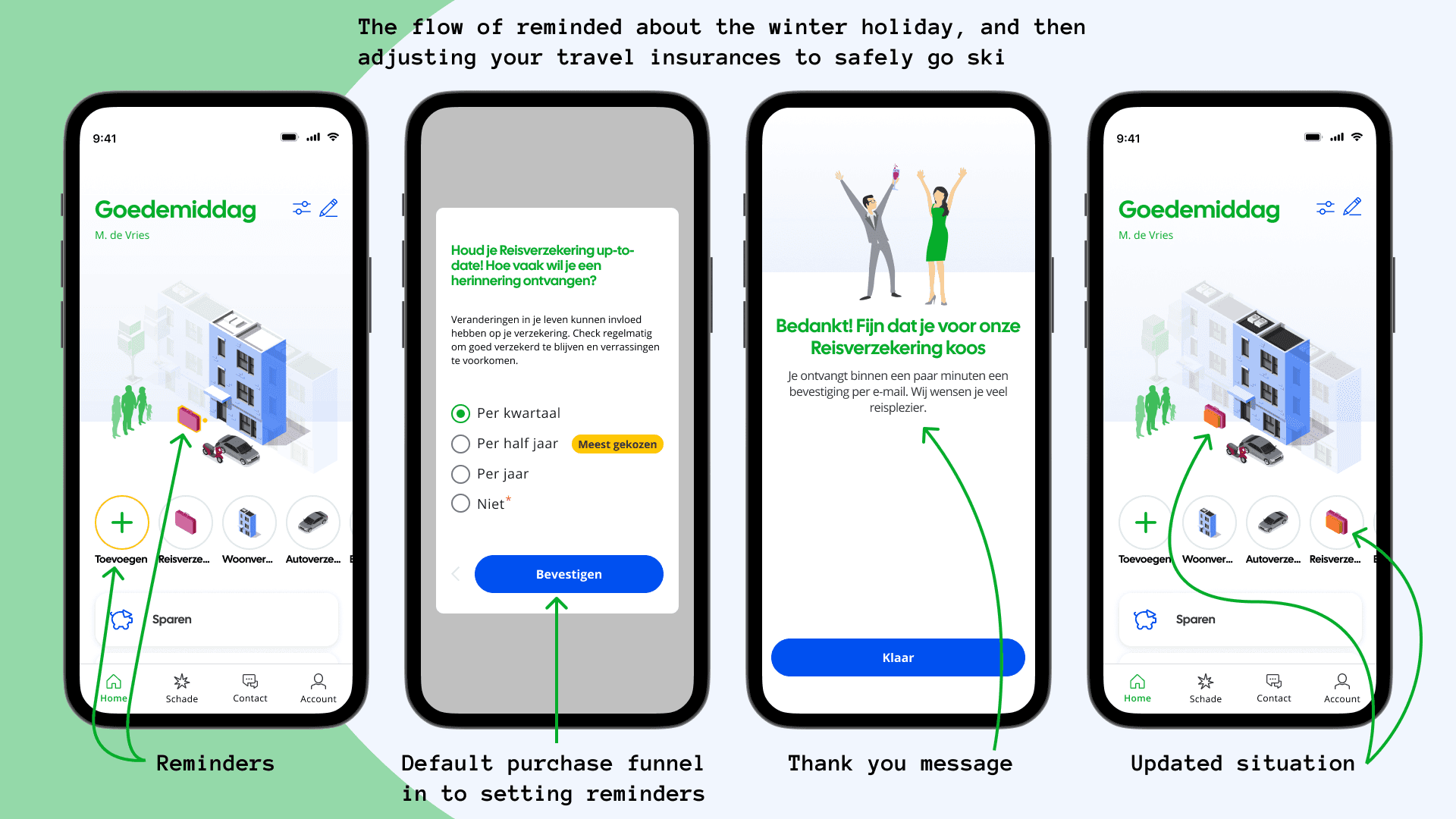
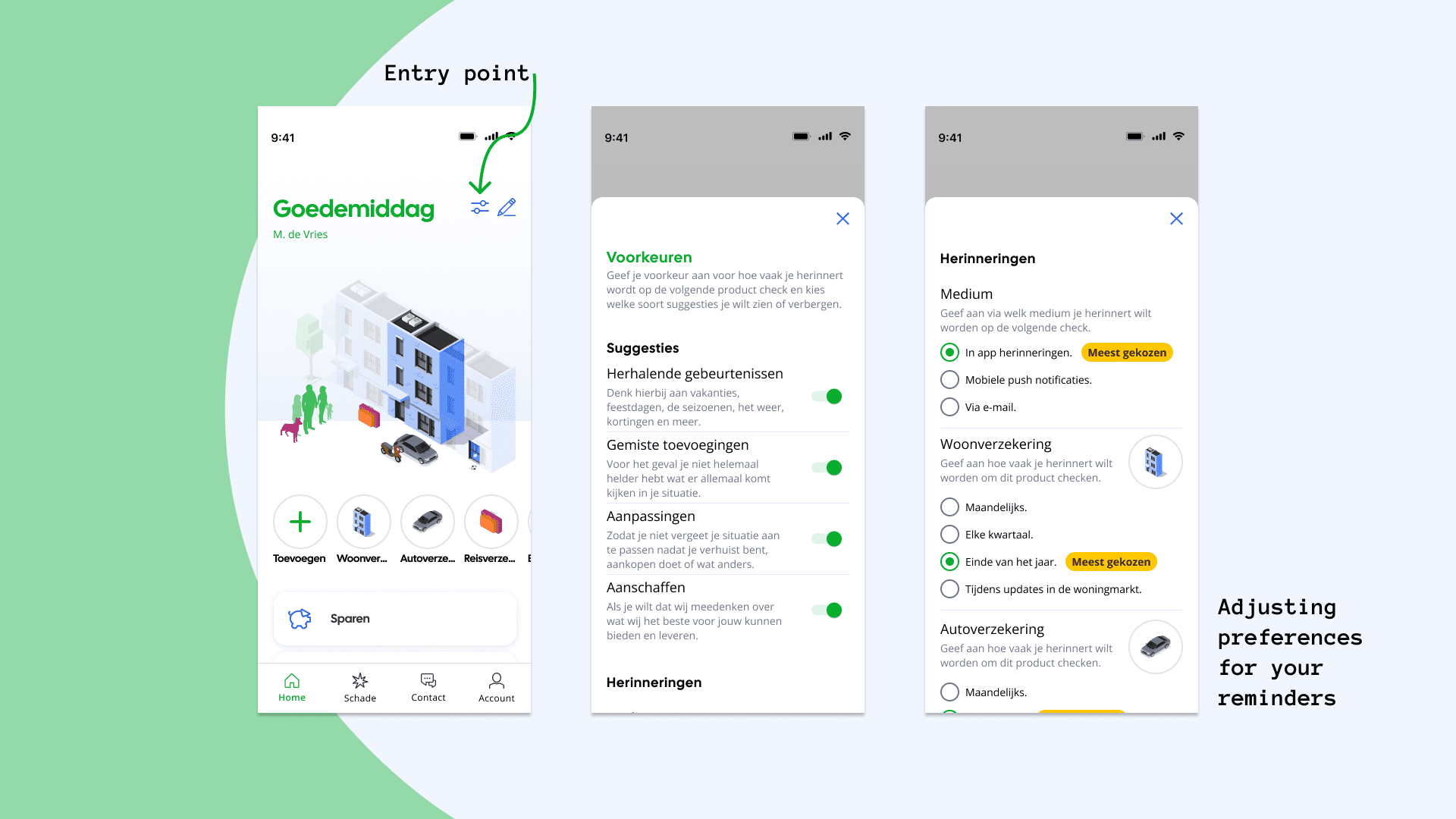
The mirror prepares, and informs you to make changes by giving reminders. These can be time based, as well as focussed around seasonal moments, such as the winter holiday where your travel insurance may need a check up. The mirror also guides you though the process of making these adjustments and purchases to new products. The mirror is preventative to unprepared situations, it gives you a clear overview, and keeps you in check.

During the presentation at Centraal Beheer's office in Apeldoorn, dozens of people from all over the company came to listen in. We were glad to get an overwhelmingly positive reaction, as well as great feedback. This reminded me why I love human-centered-design so much.